Refrigerator Electricity Consumption: Habits That Cut Units
The fridge is the one appliance in a Kerala home that never gets a break. It hums through humid afternoons, power cuts and late-night snack raids. Refrigerator electricity consumption depends as much on where the fridge stands and how your family uses it as on the star label. This guide shows where to place it, which daily habits matter, how to test the door seal and clean the coils safely, and when an old fridge is not worth another repair.
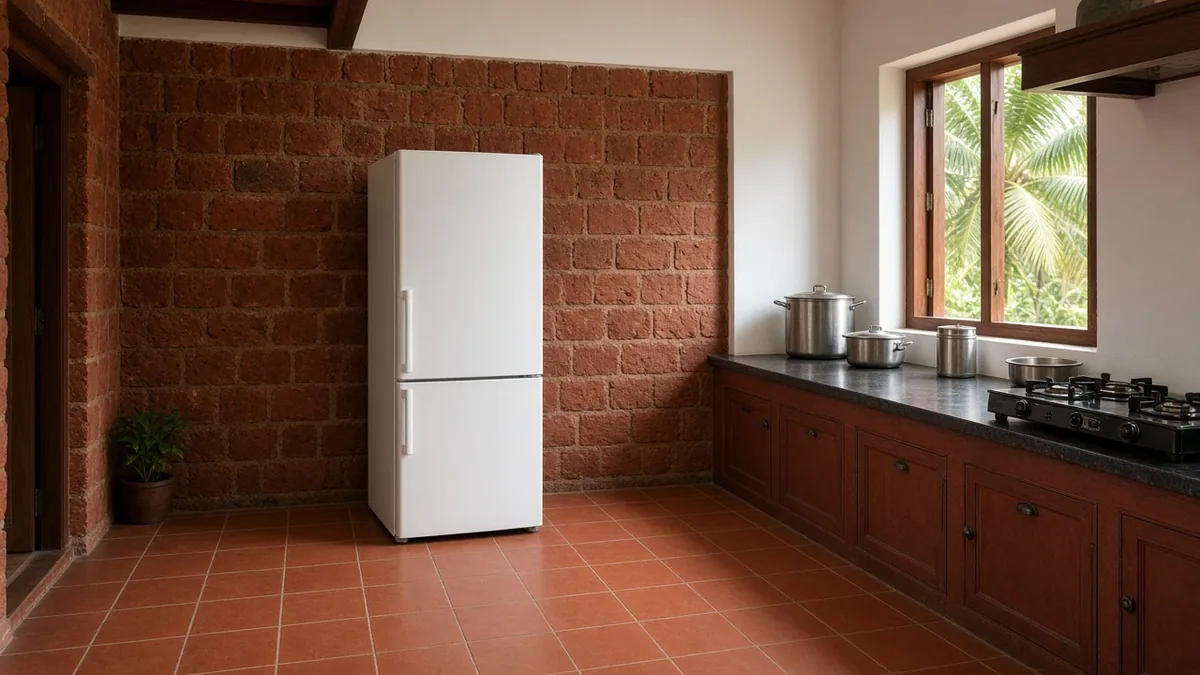
Quick answer: Give the fridge a clear gap from the wall and keep it away from the stove and sunlight. Open the door less, cool food before storing it, and avoid packing the shelves. Test the door seal, clean the back coils with the plug pulled, and call an authorised technician for anything electrical.
Key takeaways for running your fridge well
- Keep the fridge at least 100 mm (about 4 inches) from the walls, and away from the stove, the oven and direct sunlight.
- Leave space for air to move around the unit, and do not overfill the shelves, so cold air can circulate inside.
- Decide what you need before you open the door, so it stays open for less time.
- Let hot food cool down first, and put it away in sealed containers.
- Check that the rubber door seals are clean and tight, and replace them if they fail a simple paper test.
- Clean the condenser coils regularly, and defrost a manual-defrost freezer regularly.
What decides refrigerator electricity consumption at home?
A fridge does not make cold. It moves heat. Inside, a refrigerant takes up heat from the food compartment at the evaporator. The compressor then raises its pressure and temperature, and the condenser gives that heat away to the air outside the cabinet before the cycle starts again. If that heat cannot escape, the guide notes, the cooling system works harder and uses more energy.
That means the units your fridge uses depend on more than the label. Three things are in your hands: how warm the air around it is, how much warm air and warm food you let in, and how well the door and the cooling parts are kept. A Kerala kitchen tests all three: hot afternoons, humid air, and often a work area where the fridge sits near the gas stove or a sunny window.
Because a fridge never switches off, small habits add up over a whole billing period, on the same meter as everything else in the house. To see how the units on your bill are charged, read how KSEB tariff slabs work.
Where should the fridge stand in a Kerala kitchen?
The guide, prepared with the Bureau of Energy Efficiency (BEE) and published on the Energy Management Centre Kerala website, says to keep the fridge at least 100 mm (4 inches) away from the walls, so heat can leave from the back. It also says to keep it well away from the stove, the oven and direct sunlight. These heat sources slow the release of heat from the condenser and may force the compressor to run longer.
Level matters too. The same guide says the fridge should stand level, so that its door closes easily and tightly after each use and warm air does not creep in. The motor and compressor give off heat of their own, so there should be enough space for air to flow around the unit all the time.
- In a kitchen with a separate work area, put the fridge on the cooler side, away from the gas stove, the mixer corner and the steam from the rice cooker.
- Avoid a spot where the afternoon sun falls through a window onto its side. A curtain, or moving it a little, can help.
- Do not push it into a tight cupboard or alcove, and keep cartons, bags and newspapers off the top and away from the back grille.
- In coastal homes, wipe salt and dust off the outside now and then, after unplugging it as the user manual describes.
- If the floor is uneven, ask the service technician to adjust the feet instead of wedging paper or cardboard underneath.
- Plug it into its own wall socket, not into a multi-plug adapter shared with an iron or a heater.
Which daily habits make the fridge work less?
- Keep the door open for as short a time as you can. The guide advises deciding what you need before you open it.
- Let hot and warm food cool down enough before it goes in, and use sealed, airtight containers. The guide says the fridge then uses less energy and less water condenses inside.
- Avoid overfilling the storage space, so air can circulate around the food.
A Kerala example. In a Kochi flat, dinner is over and there is leftover sambar, a jug of buttermilk and a box of cut fruit to put away. Leave the sambar covered on the counter until it has stopped steaming, but do not leave it out for long, then move it into a lidded steel or glass box. Gather the buttermilk and the fruit at the same time, open the door once, place everything and close it. Keep one shelf clear for leftovers, so nobody stands at an open door shuffling bottles.
- Keep a short list on the door of what is in the freezer, so nobody searches it with the door open.
- Teach children to take what they need and shut the door, rather than standing in front of an open fridge.
- During a power cut, keep the door closed as much as you can so the cold stays in.
- When supply returns, follow the user manual on switching the fridge back on, and use a stabiliser only if the manual or the service technician recommends one.
- If supply failures are long or frequent in your area, read what KSEB compensation you can claim for power cuts.
With rooftop solar, the fridge still runs at night, so it is one load you cannot shift into the sunny hours. Shift the flexible ones instead, as shown in the best time to use appliances with solar.
How to check door seals, coils and frost
The guide gives two simple tests for the rubber door seal. Close the door on a slip of paper: a good seal holds it snugly, and if the paper slips out easily, the seal should be replaced. Or, when the room is dark, place a lit torch inside and close the door. If you can see light around the door, the seals need replacing. Keep the seals clean as well as tight.
When dust builds up on the condenser coils, the guide says the compressor works harder and uses more electricity, so the coils should be cleaned regularly. In a manual-defrost fridge, ice that collects in the freezer acts as unwanted insulation and reduces the cooling power, so the freezer should be defrosted regularly.
- Switch off and unplug the fridge before you clean behind it or defrost it, as the user manual describes.
- Clean the back grille and coils gently with a soft brush or the brush tool of a vacuum cleaner. Never use water or a sharp tool on them.
- Never chip ice off the freezer walls with a knife or screwdriver. Let it melt, and mop up the water so it cannot reach the socket.
- Do not open the back cover, the compressor area or the wiring. That is work for the authorised service technician.
- Try the paper test at several points along each door, including the corners and the hinge side.
- In the monsoon, watch for water collecting under the fridge. It can point to a blocked drain or a seal problem, so mention it at the next service.
Direct cool or frost free, and what size to buy?
There are two main types. In a direct cool fridge, food is cooled mainly by the natural movement of cold air inside, frost forms over time, and the freezer needs manual defrosting now and then. A frost free fridge keeps cold air moving all the time, which limits frost. Its freezer has a timer, a heating coil and a temperature sensor. Every six hours or so, the timer switches on the coil to melt ice off the freezer coils, and the sensor switches it off once the ice has gone.
Size is the other choice that shapes the units. The guide advises choosing a fridge sized roughly to your storing and cooling needs. One that is too small may be overworked, while one that is too large costs more to buy and can waste energy and kitchen space. Check the storage volume, which is the space actually available for food, and not only the gross volume.
Once you have a shortlist, compare the labels of models of the same type and a similar size, and look at the yearly units as well as the stars. Everything printed on the label is explained in how to read a BEE star label.
When to call a technician, and when to replace an old fridge
For servicing, the guide advises giving the maintenance contract to the manufacturer or its authorised company, which has trained technical staff. It also warns that an older fridge needing major repairs is likely to become inefficient even after the repair, so replacing it with a new energy-efficient model may be the better choice.
- The compressor seems to run almost all the time, even at night with the door shut.
- Food in the main compartment is not staying cold, or the freezer has gone soft.
- Frost keeps building up in a frost free model.
- The door seal is torn, hard or loose, or the door no longer shuts on its own.
- There is a burning smell, a buzzing from the socket, or a tingle when you touch the body. Keep children away, switch off at the wall only if it is safe, and call a qualified electrician or the service centre.
Before you decide between repair and replacement, note the model, its age and what the technician found, and ask for the estimate in writing. If you buy a new one, plan its spot first, with room at the back and sides.
Checklist: what to do with your fridge this week
- Look at the gap behind and beside the fridge, and pull it out from the wall if it is pressed close.
- Move anything that gets hot, such as a toaster or the rice cooker, away from its sides.
- Do the paper test on every door, and book a seal replacement if it fails.
- Unplug it and brush the dust off the back grille and coils.
- Clear out old food so cold air can move freely around the shelves.
- Agree on simple family habits: cool food first, lids on, one quick opening.
- If you have rooftop solar, see how night-time use shows up as import in your KSEB solar bill, line by line.
- Book an authorised service visit if any warning sign above shows up.
Check this against your bill
FGE Solar can review your latest KSEB bill and tell you which system size is worth pricing.
Frequently Asked Questions
How far from the wall should a fridge be kept?
Leave at least 100 mm, about 4 inches, between the fridge and the wall. That gap lets heat from the back escape into the room. Keep the stove, the oven and direct sunlight away from it too.
Does putting hot food in the fridge use more electricity?
It makes the fridge work harder. The BEE guide on the EMC Kerala site advises letting hot or warm food cool enough before it goes in. Using airtight containers also cuts the moisture that condenses inside.
Why is my fridge running all the time?
Look first for heat from the stove or the sun, and a back pressed against the wall. Then check for a door that is opened often or does not shut tightly, and for dusty coils. If it still runs non-stop, or the food is not cold, call the authorised service centre.
Do frost free fridges need defrosting?
They are built to clear frost on their own. A timer switches on a heating coil around the freezer coils every six hours or so, and a temperature sensor switches it off once the ice melts. If frost keeps building up anyway, have the fridge checked.
Is it worth repairing a very old fridge?
Not when the job is a big one. A fridge that has aged and now needs heavy repair work tends to stay wasteful afterwards, the BEE guide says. Buying a new efficient model can then make more sense.
What should I do with the fridge during a power cut?
Keep the door shut as much as possible, so the cold stays inside. Avoid adding warm food until supply is back. If cuts are frequent and you are weighing backup options, compare on-grid, off-grid and hybrid solar.
Official Sources and Accuracy Note
- 01Buying and Maintaining an Energy-Efficient Home Refrigerator (Bureau of Energy Efficiency energy efficiency guide, Version 2.0), hosted on the Energy Management Centre Kerala website
Takeaways list: 'Identifying the Right Location' (at least 100 mm / 4 inches from walls; away from stove, oven, direct solar radiation) and the 'Energy Saving Tips' bullets (airflow, overfilling, door, hot food, seals, coils, manual defrost).
govt source · opened 2026-10-24
Accuracy note: This guide is built from government pages, regulator orders, and news sources on the web. Rules and amounts change. Some details may be outdated or wrong. Check the official links below before you pay, apply, or complain to KSEB.