Rats Chewing Solar Cables: How to Spot It and Protect Your Plant
Shredded fibre under the panels, a split cable pipe or a sudden drop in output can all mean animals have found your rooftop plant. Rats chewing solar cables is a common problem in Kerala homes near coconut palms and fields, and monkeys and nesting birds add their own damage. This guide shows how to spot it safely, what protection a well-built plant should already have, and what to ask your installer.
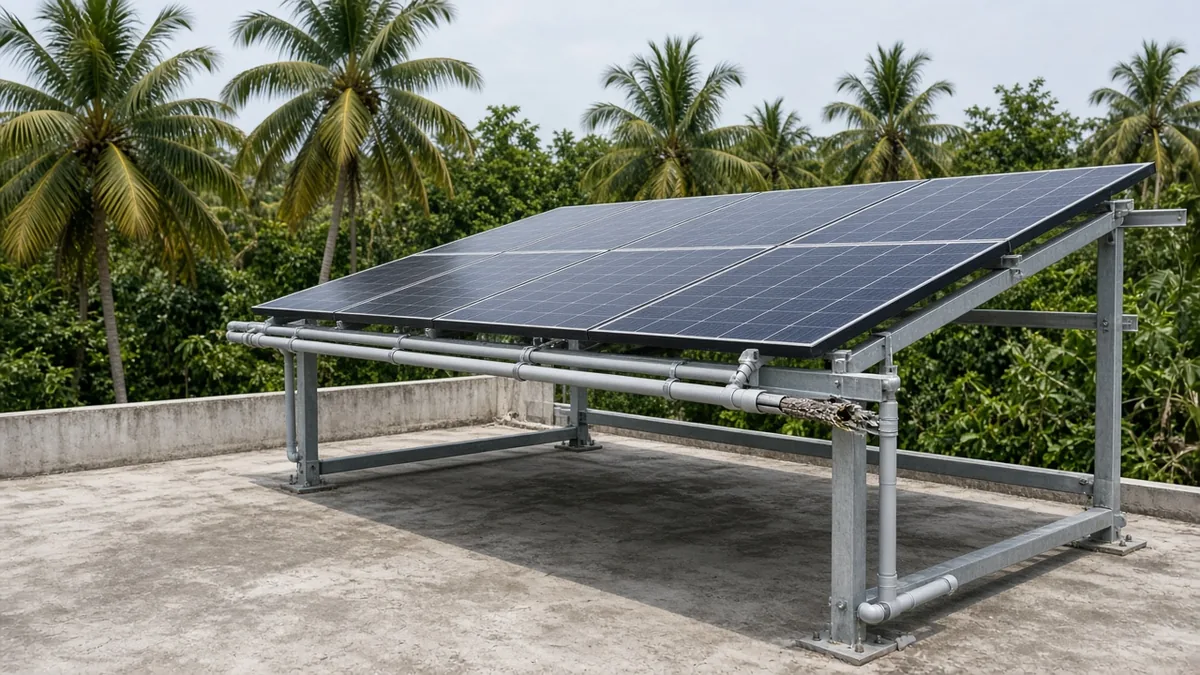
Quick answer: Look for split cable pipes, bare or scraped cables, lifted tray lids and nesting material, but only from a safe spot. Never touch a damaged cable, because roof wiring can be live in daylight. Photograph it, report it to your installer in writing, and ask for pipe, clamps and guards to be checked at each service visit.
Why rodents and monkeys go after rooftop solar wiring
A rooftop plant gives small animals exactly what they look for: a dry, shaded space under the panels, cables to gnaw on and a quiet corner away from people. Near coconut palms, rubber trees or fields, rats and squirrels climb up easily, and monkeys use the panels as a walkway. Pigeons and mynas nest in the gap between the panels and the roof.
The damage is not only a nuisance. A chewed cable can stop part of the plant from producing, and an exposed conductor on the roof is a shock and fire risk. A well-built plant already has most of the protection in place. For routine upkeep of the rest of the plant, see our guide to routine solar panel maintenance and servicing.
- Look for damage only from safe spots, never by walking on the roof edge or the panels.
- Never touch, tape or pull a chewed solar cable yourself, even when the inverter is off.
- Well-laid cables run inside pipe or covered trays with tight clamps, which leaves little to gnaw.
- Keep the roof clear of fronds, stored items and food waste that attract animals.
- Report damage to your installer in writing, with photos, as soon as you see it.
- Ask for animal-proofing checks at every service visit, especially before and after the monsoon.
What should protect the cables on a rooftop plant?
The cable itself is the first line of defence. For plants under PM Surya Ghar, MNRE's technical specification says cables should be flexible with good resistance to heat, cold, water, oil and abrasion, and that armoured cable should be used, with PVC type 'A' or XLPE insulation for UV protection (Annexure 3, clauses 9.2 and 9.3).
The routing rules matter just as much, because a cable inside a pipe or a covered tray is far harder for an animal to reach. What the specification asks for, and what you can check from a safe spot:
| What the specification says | Where it says it | What you can look for |
|---|---|---|
| All cables and wires routed in RPVC pipe or a GI cable tray, tagged and marked so each cable can be identified | Annexure 3, clause 9.9 | Lengths of bare cable lying loose on the roof or hanging between rows |
| Covers provided on all cable trays | Annexure 3, clause 9.10 | Trays with missing or lifted lids |
| Thermoplastic clamps on cables and conduits at intervals not exceeding 50 cm | Annexure 3, clause 9.11 | Pipes that sag, have come out of their clamps or have split joints |
| Cable selected to last the life of the panels, that is 25 years | Annexure 3, clause 9.13 | Cracked, brittle or faded outer sheath |
The boxes where cables meet are covered too. The specification asks for array junction boxes with a full dust, water and vermin proof arrangement, with cables entering through suitable cable glands, and says the boxes should be mounted on the structure where they are easy to reach and protected from direct sunlight and harsh weather (Annexure 3, clauses 5.1 and 5.5). How the same boxes keep rain out is covered in our page on finding the cause of a roof leak under solar panels.
Rats chewing solar cables: signs to look for from a safe spot
Most damage shows up in a few familiar ways. Walk around the terrace only where there is a proper parapet, on a dry day, and look without touching anything.
- Gnaw marks, holes or split sections on the pipe that carries the cables.
- Cable sheath that looks scraped, nibbled or shredded, especially where a cable leaves its pipe.
- Droppings, shredded plastic, coconut fibre or twigs collected under the panels.
- Nests of pigeons or mynas packed into the gap between the panels and the roof.
- Tray lids pushed aside or a pipe pulled out of its clamps, which can point to monkeys.
- A sudden drop in generation, or a fault message on the inverter screen, on a sunny day.
A drop in output has many possible causes, so do not assume it is an animal. Our guide on checking whether your plant is producing enough shows how to compare readings over a few clear days before you call the installer.
What to do if you find a chewed or exposed cable
Treat any exposed or damaged cable on the roof as live. The panels keep producing power whenever there is daylight, so switching off the inverter does not make the roof cables safe to handle. Keep children and pets off the roof until the installer has been.
- Do not touch, tape, cut or move the cable, and do not try to pull out a nest wrapped around it.
- Photograph the damage from a safe spot, with a date, and note any message on the inverter screen.
- Call your installer and follow the steps they or the inverter manual give for switching off.
- If there is smoke, sparking or a burning smell, keep everyone away from it and call the fire service.
- Do not lay poison or glue traps near the cables; a dead animal under the panels is a new problem.
Reporting quickly is also part of your side of the deal. MNRE's model consumer-vendor agreement lists reporting any malfunctioning of the plant to the vendor during the warranty period among the consumer's duties. On the vendor's side, it says five years of comprehensive operation and maintenance, including overhauling, wear and tear and regular checking of the health of the system, is in the vendor's scope (Annexure 2, consumer duty 5 and vendor clause 12).
For PM Surya Ghar plants, the guidelines also say registered vendors shall provide repairs and maintenance free of cost for the 5-year Comprehensive Maintenance Contract (CMC) period from the date of commissioning, and replace or repair non-performing parts free of cost in that period (Section 7(d)). They do not list animal damage separately, so send your photos and dates in writing and ask the installer to confirm how the repair will be handled. How the agreement is approved on the portal is explained in our page on the PM Surya Ghar vendor agreement.
How to keep rats, squirrels and monkeys away from the plant
Prevention is mostly about removing what draws animals to the roof and closing the easy ways in. None of it needs you to go near the panels or the cables.
- Keep the terrace clear of stored timber, old furniture, sacks and plant pots that give rodents cover.
- Do not dry copra, fish or grain near the plant, and keep food waste off the roof.
- Have branches that touch the roof or overhang the panels trimmed back, using a trained worker.
- Clear fallen fronds, leaves and nesting material from around the array after storms, without reaching under the panels.
- Ask the installer to seal gaps where the cable pipe enters the wall or the parapet.
- Ask whether a mesh guard around the edge of the array suits your structure, and let the installer fit it.
Monkeys are harder to keep off. Avoid feeding them anywhere near the house, keep loose items off the roof, and ask the installer to check clamps, tray lids and panel fixings after a troop has passed through. Coastal homes should combine these checks with the rust checks in our notes on corrosion on coastal solar plants.
What to ask your installer at the next service visit
Your plant's manual should already tell you what to watch. MNRE's specification says an operation and maintenance or user manual and the engineering and electrical drawings shall be supplied with the plant, that the manual should include the do's and don'ts of the plant, and that step-by-step maintenance and troubleshooting procedures shall be given in it (Annexure 3, clauses 10.1, 10.3 and 10.4). Keep it with your other papers, as in our solar documents checklist for Kerala homes.
Questions worth asking, in writing if you can:
- Are all the cables between the panels, the junction boxes and the inverter inside pipe or a covered tray?
- Are any clamps loose, any tray lids missing or any pipe joints split?
- Is any cable sheath scraped or chewed, and does anything need replacing now?
- Are the junction box lids and cable glands closed and undamaged?
- Is there any nesting material under the panels that you can remove safely?
- Would a mesh guard or extra conduit help on my roof, and what would it involve?
If the answers are vague or the same problem keeps coming back, it is a sign to look at how the plant was built. Our guide on choosing a solar company you can rely on lists what good workmanship looks like.
A Kerala example: squirrels under the panels in a coconut garden
Picture a house in Thrissur with a rooftop plant on a flat terrace and coconut palms on two sides. One sunny week the owner notices the inverter showing less than usual and sees shredded fibre under one row of panels. From the parapet, they can see a short stretch of cable lying outside its pipe near the last panel, with a scraped sheath.
They keep everyone off the terrace, take dated photos and write to the installer. The installer replaces the damaged length, puts it back inside a pipe with fresh clamps, clears the nest and fits a mesh guard along that edge. The owner has the fronds touching the roof trimmed and moves stored coconuts off the terrace. This is an illustration, not a real customer. If new shade from the palms also appears, our guide to shade that appears after installation covers that check.
Checklist: animal-proofing your solar plant this week
- Look from a safe spot for bare cable, split pipe, lifted tray lids and nesting material.
- Photograph and date anything that looks wrong, and note any message on the inverter screen.
- Clear stored items and food waste from the terrace, and have touching branches trimmed.
- Find your plant manual, drawings and the installer's contact details.
- Ask the installer for an animal-proofing check at the next service visit.
- Never touch, tape or move a damaged cable; call the installer, and the fire service if there is smoke or sparking.
Lightning and surge parts share the same roof, so ask that nobody removes an earthing conductor while fitting guards. Our solar lightning protection guide explains what those parts do.
Check this against your bill
FGE Solar can review your latest KSEB bill and tell you which system size is worth pricing.
Frequently Asked Questions
Do rats really damage rooftop solar cables in Kerala?
They can, especially where cables lie outside their pipe or tray. Rodents gnaw on cable sheaths and nest in the sheltered gap under the panels. Homes near coconut palms, fields or markets see it more often.
What type of cable should a rooftop solar plant use?
MNRE's specification for PM Surya Ghar plants asks for armoured cable with PVC type 'A' or XLPE insulation for UV protection (Annexure 3, clause 9.3). It also says the cable should be chosen to last the 25-year life of the panels (clause 9.13).
How often should solar cables be checked for animal damage?
Ask for it at every service visit, along with the rest of the plant. Look from a safe spot yourself after storms, before the monsoon and whenever output drops on a clear day. Any sign of gnawing is a reason to call the installer early.
Can I tape a chewed solar cable myself?
No. Roof cables can carry power whenever there is daylight, even with the inverter off. Leave the cable alone, keep people away and call your installer to repair it.
How do I stop monkeys from damaging solar panels?
Do not feed them near the house and keep loose items off the roof. Ask your installer whether a mesh guard suits your structure. After a troop passes through, have clamps, tray lids and fixings checked.
Should junction boxes on the roof keep animals out?
Yes. MNRE's specification asks for array junction boxes with a full dust, water and vermin proof arrangement (Annexure 3, clause 5.1). If a lid is cracked or open, ask the installer to fix it rather than opening it yourself.
Official Sources and Accuracy Note
- 01MNRE Guidelines for PM-Surya Ghar: Muft Bijli Yojana (CFA to Residential Consumers), including Annexures 2 and 3
Section 7(d): free repairs and maintenance for the 5-year CMC from commissioning. Annexure 2: consumer duty to report a malfunction, and vendor clause 12 on five-year comprehensive O&M. Annexure 3 clauses 5.1, 5.5, 9.2, 9.3, 9.9 to 9.11, 9.13, 10.1, 10.3 and 10.4: vermin-proof junction boxes, armoured UV-resistant cable, RPVC or GI tray routing with covers and clamps, and the O&M manual.
govt source · opened 2026-10-23
Accuracy note: This guide is built from government pages, regulator orders, and news sources on the web. Rules and amounts change. Some details may be outdated or wrong. Check the official links below before you pay, apply, or complain to KSEB.