Grid Support Charges for Kerala Solar: Who Pays and How Much
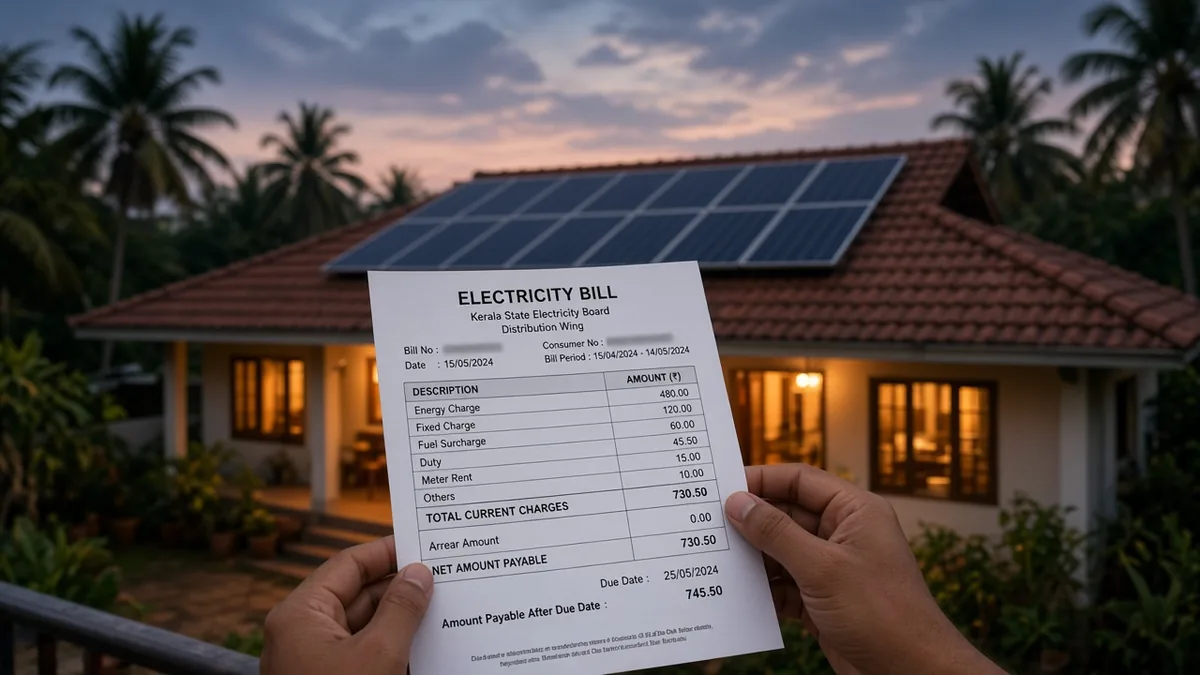
If you use solar energy in Kerala through a net-metered rooftop plant, there is one more line to understand on your KSEB bill. Grid support charges for Kerala solar apply when a prosumer draws banked solar units back from the grid in non-solar hours. Right now most homes are exempt, but the rules change for some new plants from 1 April 2027.
This guide explains the charge in plain words, with the interim rates, three bill examples and who pays by plant size and feasibility date. It is based on Regulation 28.7 of the KSERC (Renewable Energy and Related Matters) Regulations, 2025, and sits alongside the KSEB net metering rules that decide how your solar units are banked.
Quick answer
The KSEB grid support charge applies to net-metered prosumers on grid power used in non-solar hours, up to the banked units adjusted. Interim rates are 50 paise per unit for the first 300 units and ₹1 per unit after that. Domestic plants up to 10 kW are exempt today; new feasibility above 5 kW pays from 1 April 2027.
Key takeaways
- The charge applies only to net-metered prosumers, not to every consumer (Regulation 28.7).
- It is counted on grid units used in non-solar hours, up to the banked units adjusted.
- Interim rates: 50 paise per unit for the first 300 charged units in a month, ₹1 per unit for the balance.
- Existing and new domestic plants up to and including 10 kW are exempt for now. Agricultural systems are exempt.
- From 1 April 2027, new plants above 5 kW that seek feasibility from that date lose the exemption.
What is the KSEB grid support charge?
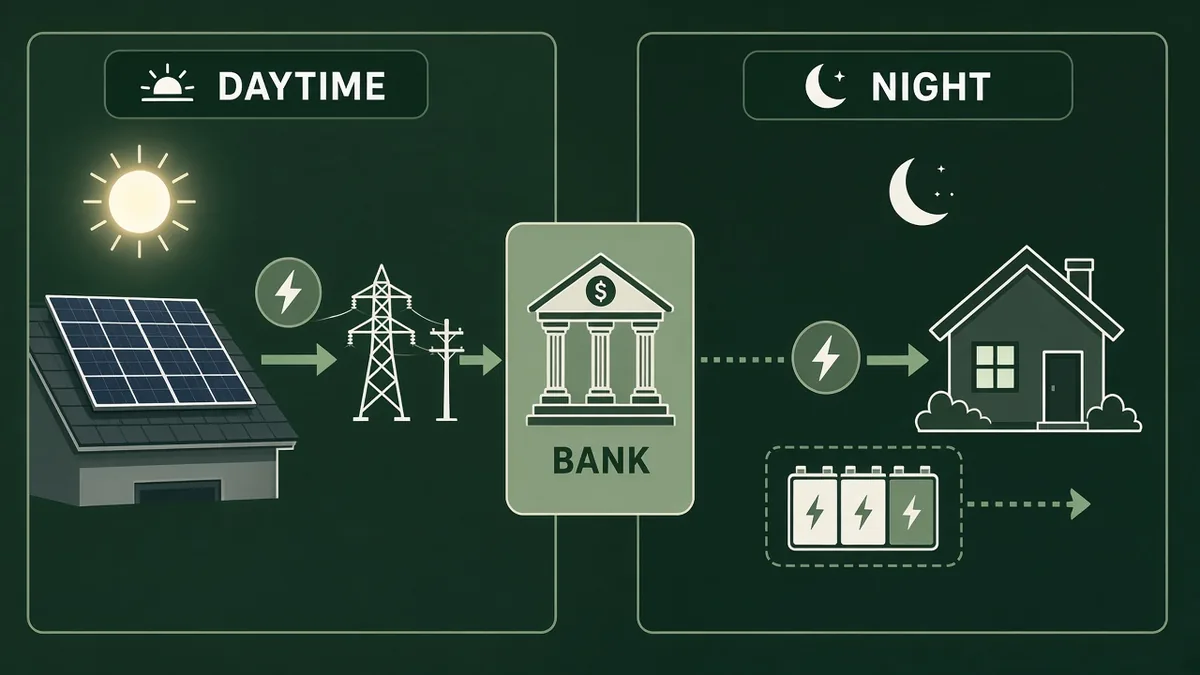
A net-metered rooftop plant sends its spare daytime units to the grid. KSEB records these as banked energy and sets them off against the power you draw later, so the grid works like a store for your extra solar units.
The grid support charge is a small fee on using that store. Under the 2025 regulations it is collected from net-metering prosumers on grid energy used in non-solar hours, up to the banked energy adjusted. It is separate from the fuel surcharge and fixed charge.
Solar hours and non-solar hours in plain words
Solar hours are the daytime hours when rooftop panels are producing power. Non-solar hours are the rest of the day: evening, night and early morning, when your panels produce little or nothing and your home runs on grid power.
This is why people sometimes call it a non-solar hours charge. Many Kerala homes use much of their electricity after sunset, so that is when banked units are usually drawn back. The exact hour bands are set by KSEB and KSERC, so check your bill or ask your section office.
How the banked energy charge is worked out
Think of it as a banked energy charge with two limits. KSEB looks at two figures for the billing period:
- Units you drew from the grid in non-solar hours.
- Banked solar units adjusted against your consumption, after KSEB's normalisation.
The charge applies to the smaller of the two. The regulation gives its own example: if you draw 400 units in non-solar hours and 300 banked units remain after normalisation, the charge applies on 300 units only. Any banked units left over at the end of the settlement period are handled separately, which we explain in our guide to APPC surplus settlement.
Grid support charges for Kerala solar: the interim rates
Until KSERC fixes grid support charges while deciding a distribution licensee's tariff petition, Regulation 28.7 sets interim rates. They apply to the charged units in each month, in two slices.
| Slice of charged units in the month | Interim rate | Regulation |
|---|---|---|
| First 300 units | 50 paise (₹0.50) per unit | 28.7 |
| Balance units above 300 | ₹1 per unit | 28.7 |
A "unit" here is one kWh. The Commission may later replace these interim numbers with category-wise rates. Until it does, the 50 paise and ₹1 structure applies.
Worked examples: what the charge adds to a bill
The examples below are illustrations only. They assume a prosumer who is not exempt, such as a home plant above 10 kW. If your plant is exempt, the grid support charges on your Kerala solar bill should be zero. For the full bill, try our KSEB bill calculator.
Example 1: 400 units at night, 300 banked units adjusted
A home draws 400 units in non-solar hours. After normalisation, 300 banked units are adjusted against that use.
- Charged units: the smaller of 400 and 300, so 300 units.
- All 300 units fall in the first slice: 300 x ₹0.50 = ₹150.
- Grid support charge for the month: ₹150.
Example 2: a larger plant with 450 charged units
A larger home plant ends up with 450 charged units in a month.
- First slice: 300 x ₹0.50 = ₹150.
- Balance: 150 x ₹1 = ₹150.
- Grid support charge for the month: ₹300, which works out to about 67 paise per charged unit on average.
Example 3: when you draw less than your banked units
A home draws 250 units in non-solar hours and has 400 banked units available for adjustment.
- Charged units: the smaller of 250 and 400, so 250 units.
- All 250 units fall in the first slice: 250 x ₹0.50 = ₹125.
- Grid support charge for the month: ₹125.
The charge grows with how much banked solar you pull back at night. Using more of your solar power directly in the daytime keeps the charged units lower.
Who pays and who is exempt
Whether you pay grid support charges on Kerala solar depends on your category, your plant size and, for new plants, the date you seek feasibility.

| Prosumer and plant | Grid support charge today | From 1 April 2027 |
|---|---|---|
| Existing domestic prosumer, up to and including 10 kW | Exempt | Exempt |
| New domestic plant up to 5 kW | Exempt | Exempt |
| New domestic plant above 5 kW to 10 kW, feasibility before 1 April 2027 | Exempt | Exempt |
| New domestic plant above 5 kW to 10 kW, feasibility from 1 April 2027 | Not applicable yet | Pays interim rates (50 paise, then ₹1) |
| Any home plant above 10 kW | Pays interim rates | Pays interim rates |
| Agricultural consumers with renewable systems (existing and new) | Exempt | Exempt |
| Other net-metered prosumers (for example commercial) | Not in the domestic or agricultural exemption list; confirm with KSEB | Confirm with KSEB |
Why your feasibility date matters more than your installation date
The 1 April 2027 change is tied to when a plant seeks feasibility, not when the panels go up. A new 7 kW home plant with feasibility in, say, January 2027 stays exempt even if installation finishes later. The same plant seeking feasibility in May 2027 would pay.
If you are planning a plant between 5 kW and 10 kW, this is the date to know. Keep a copy of your feasibility approval.
Timeline: what changes and when
| When | What applies |
|---|---|
| Now (under the 2025 regulations) | Interim rates of 50 paise and ₹1 per unit. Domestic plants up to 10 kW and all agricultural systems exempt. Home plants above 10 kW pay. |
| From 1 April 2027 | New plants above 5 kW seeking feasibility from this date pay, including domestic plants between 5 kW and 10 kW. The same date brings a 10% storage requirement for new feasibility above 5 kW up to 10 kW (Regulation 6.3). |
| After KSERC decides a tariff petition (no date fixed) | KSERC may replace the interim rates with category-wise grid support charges. |
Grid support charge vs fuel surcharge vs fixed charge
These three lines are often confused on a KSEB bill.
| Charge | Who pays | What it is based on |
|---|---|---|
| Grid support charge | Net-metered prosumers who are not exempt | Grid units used in non-solar hours, up to banked units adjusted |
| Fuel surcharge | Consumers generally | Ordinary consumption, when power purchase fuel costs vary |
| Fixed charge | Consumers, with specific options for solar prosumers | Your connection, not the units you bank |
For how the fixed charge works for rooftop solar homes, see our guide to fixed charge options for solar prosumers.
What to check on your current bill in Kerala
A few minutes with your current bill in Kerala will tell you whether the charge is applied correctly.
Look at:
- Your plant capacity and category (domestic or agricultural).
- Your feasibility date, if your plant is above 5 kW. Match it against the 1 April 2027 cut-off.
- Any line for grid support charge. The label on the bill may vary, so ask your section office if you are unsure.
- The charged units. They should not exceed the smaller of your non-solar hours use and banked units adjusted.
- The rate: 50 paise for the first 300 charged units, ₹1 after that, unless KSERC has set new rates.
If you are exempt and still see the charge, raise it with your KSEB section office. For energy charges by slab, read our guide to KSEB tariff slabs.
How this fits with net metering and battery rules
Storage rules sit nearby in Regulation 6.3. Domestic plants above 10 kW already need hybrid inverters with minimum storage, and from 1 April 2027 new feasibility above 5 kW up to 10 kW also needs 10% storage. Grid support charges and storage thresholds are related timing rules, not the same fee. Our guide to hybrid inverter and battery rules explains the storage side.
A battery can also reduce how much banked solar you draw back at night. If you share a plant in an apartment, read about virtual net metering for apartments, which works under the same set of regulations.
What FGE Solar recommends before you size a plant
The charge is small next to the savings from a well-sized plant, but it can tip the choice between two sizes. Before you commit to solar power in Kerala, we suggest:
| Check | Why it matters |
|---|---|
| Size to your real use, not the largest roof | Staying at or below 10 kW keeps a domestic plant exempt today |
| If you need 5 to 10 kW, apply for feasibility before 1 April 2027 | Feasibility before that date keeps a new plant in this range exempt |
| Look at your night-time use | Heavy evening use means more banked units drawn back, and a higher charge if you are not exempt |
| Price a hybrid option for larger plants | Required for some sizes, and it can reduce night-time grid draw |
For the bigger picture on payback, see how much you can save with solar in Kerala.
Frequently asked questions
What is the grid support charge for Kerala rooftop solar?
It is a charge on the grid electricity a net-metered prosumer uses in non-solar hours, counted only up to the banked solar units adjusted against it. Until KSERC sets new rates in a tariff petition, the interim rates in Regulation 28.7 are 50 paise per unit for the first 300 units and ₹1 per unit after that.
Do homes with 5 kW or 10 kW solar pay grid support charges?
Not at present. Existing and new domestic prosumers with plants up to and including 10 kW are exempt. The change comes for new plants above 5 kW that seek feasibility from 1 April 2027.
Any home plant above 10 kW pays.
Will a new 7 kW solar plant pay grid support charges after April 2027?
It depends on the feasibility date, not the installation date. A new 7 kW domestic plant that got feasibility before 1 April 2027 stays exempt. One that seeks feasibility from 1 April 2027 pays under the interim rate clause.
Is the grid support charge the same as fuel surcharge?
No. Fuel surcharge is a separate monthly charge on ordinary consumption when power purchase fuel costs vary. The grid support charge applies only to net-metered prosumers using banked units in non-solar hours.
Can the 50 paise grid support charge rate change?
Yes. The regulation allows KSERC to set grid support charges when it decides the distribution licensee's tariff petition. The 50 paise and ₹1 figures apply only until that happens.
Are agricultural solar systems exempt from grid support charges?
Yes. All existing and new agricultural consumers with renewable systems are exempt under Regulation 28.7.
Official sources and accuracy note
- 01 KSERC (Renewable Energy and Related Matters) Regulations, 2025: Regulations 6.1 to 6.3 (net metering capacity and storage) and Regulation 28.7 (interim grid support charges) (erckerala.org)
- 02 KSEB prosumer, billing and net metering information (kseb.in and your electrical section office)
Accuracy note: This guide summarises official regulations as of 29 September 2026. Rates, exemptions and dates can change. Please check the latest KSERC and KSEB documents before you pay, apply or raise a complaint.
Not sure whether grid support charges on Kerala solar apply to your plant, or which size keeps you exempt? Send us your latest KSEB bill and we will check your plant size, feasibility timing and night-time use before you commit. Request a free bill review from FGE Solar, a solar company in Kerala that handles the KSEB paperwork end to end.