Kerala Single Phase Solar 3 kW Inverter Cap Guide 2026
On a typical single-phase KSEB home connection, the inverter AC rating is capped at 3 kW under Regulation 16.5. Want 4 kW or 5 kW on paper? You usually need a three-phase inverter—unless a narrow exception applies until 31 March 2027.
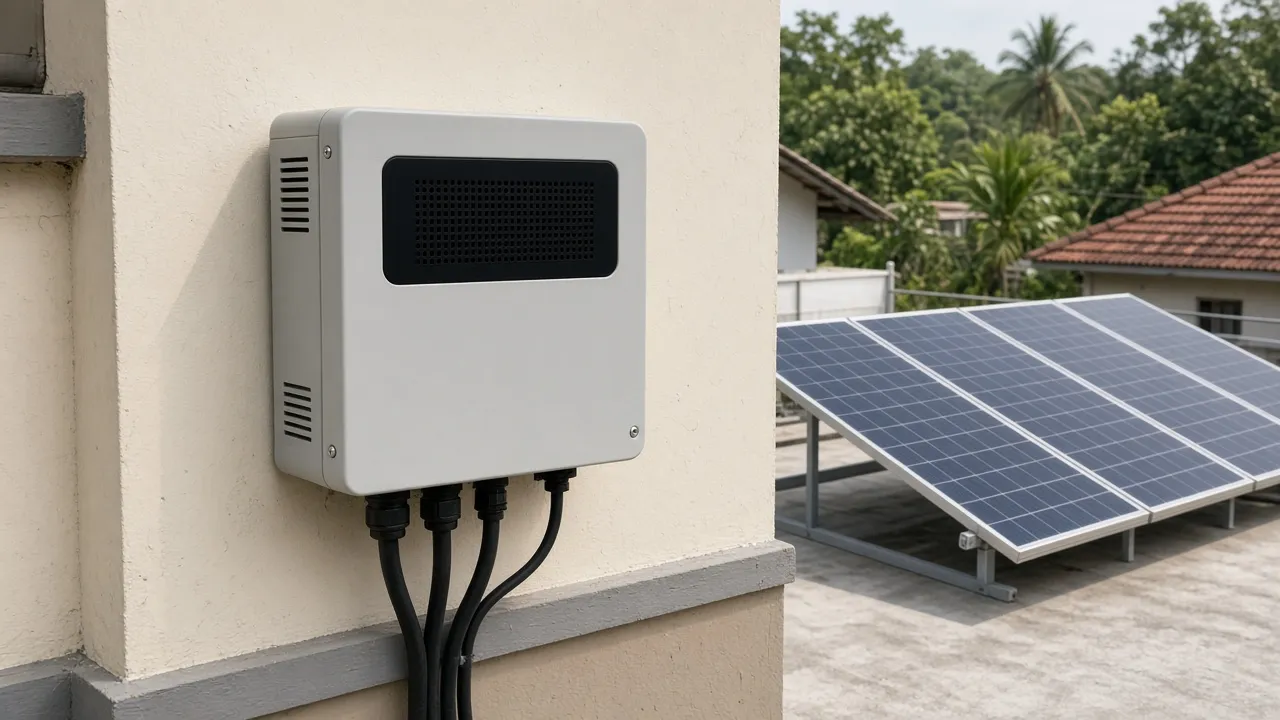
Quick answer: 3 kW max plant capacity on a single-phase inverter (Reg 16.5). Above 3 kW → three-phase inverter. Exceptions: feasibility already granted before notification can keep the proposed inverter; if no three-phase line exists at feasibility, single-phase up to 5 kW is allowed for new applications till 31 Mar 2027.
What single phase solar 3 kW means under Regulation 16.5
Regulation 16.5 is short and clear. The maximum plant capacity that can be connected through a single-phase inverter is 3 kW. For every renewable installation with plant capacity greater than 3 kW, three-phase inverters must be installed. Plant capacity here means the inverter’s nominal AC kilowatts, not the panel kilowatt-peak printed on the modules.
Regulation 3(73) defines plant capacity of the solar generation system as the nominal capacity on the AC side of the inverter in kW. So a house with 4 kWp of panels behind a 3 kW single-phase inverter is still a 3 kW plant for this rule. A 5 kW inverter on a single-phase service would break Regulation 16.5 unless one of the two provisos below applies.
Who can stay on a single-phase inverter after 3 kW
The first proviso protects people already in the queue. Existing prosumers, including applicants who obtained feasibility up to the date of notification of these regulations, may continue with their existing or proposed inverter. That is a grandfathering line for systems already approved under the older process. It is not a free pass for a brand-new feasibility filed after notification to ignore the 3 kW single-phase cap.
The second proviso covers places where a three-phase network is not available when you seek feasibility. In that case, single-phase solar inverters with capacity up to and including 5 kW are permitted for applicants seeking feasibility till 31 March 2027. After that date, or once three-phase supply is available at the site, the main 3 kW single-phase limit applies again for new feasibilities.
- What is the inverter’s nominal AC rating in kW?
- Is your service connection single-phase or three-phase today?
- Did you already hold feasibility on or before the regulations’ notification date?
- If you want more than 3 kW on single-phase, has KSEB confirmed that no three-phase network exists at your premises for the 5 kW exception until 31 March 2027?
How this fits domestic net metering up to 20 kW
Domestic consumers may opt for net metering for plant capacities from 1 kW to 20 kW under Regulations 6.1 and 6.3. That band is about eligibility for net metering, not about how many phases your inverter uses. A 5 kW or 10 kW domestic plant is still allowed in the net-metering band, but Regulation 16.5 says those sizes need a three-phase inverter unless a proviso applies.
Regulation 6.6 still caps plant capacity at your connected load in kW for ordinary connected-load billing. So a single-phase home with 2 kW connected load cannot claim a 3 kW plant just because Regulation 16.5 allows 3 kW on single-phase wiring. You take the lower of the rules that apply to your connection.
Regulation 6.1 opens net metering to domestic, industrial, agriculture and residential common-area connections within their capacity bands. A shop or other commercial connection is not in that domestic net-metering list; those consumers use net billing under Regulation 7 when they install a renewable plant. The single-phase inverter limit in Regulation 16.5 still applies across renewable installations, but the billing system follows the category rules.
Practical sizing examples for Kerala homes
Example: a Thiruvananthapuram house on a single-phase service wants a new net-metered plant. The installer quotes 3.6 kWp of panels with a 3 kW single-phase hybrid inverter. Plant capacity is 3 kW. That matches Regulation 16.5’s single-phase ceiling. Panel kilowatt-peak can sit above 3 kWp if the inverter’s AC output never exceeds its rated capacity, as Regulation 16.6 allows when designing DC capacity.
Example: the same house wants 5 kW. Under the main rule, the inverter must be three-phase. If KSEB confirms that no three-phase network is available at feasibility, a single-phase inverter up to and including 5 kW can be used for feasibilities sought till 31 March 2027. If three-phase supply already reaches the premises, that exception does not open.
| Plant capacity (AC kW) | Default inverter phase | Exception / note |
|---|---|---|
| Up to 3 kW | Single-phase allowed | Still limited by connected load under Reg 6.6 |
| Above 3 kW | Three-phase required | Main rule for new feasibilities |
| Above 3 kW up to 5 kW | Single-phase only if no three-phase network | Feasibility till 31 Mar 2027 |
| Already had feasibility at notification | May keep proposed inverter | First proviso to Reg 16.5 |
What does not change your prosumer status
If you already have a net-metered plant, Regulation 2.3 keeps you under net metering until you opt out, the plant’s useful life ends, or you enhance capacity. Replacing panels, or replacing the inverter with a new inverter or hybrid inverter within plus or minus 10% of the original inverter capacity, is not treated as a capacity enhancement. Swapping a failed 3 kW single-phase inverter for another 3 kW unit in that band is not an “upgrade” that restarts the rules by itself.
New applicants who seek feasibility after the regulations were notified do not get the old single-phase practice by default. They follow Regulation 16.5 as written: 3 kW on single-phase, three-phase above that, or the time-limited 5 kW exception where three-phase lines are missing. Keep the KSEB feasibility letter; it is the document that proves which proviso, if any, applied to you.
What three-phase conversion costs under OP 34/2026
If your home is still on a single-phase service and you need a plant above 3 kW, you usually apply for a three-phase conversion first. In Order OP 34/2026 dated 23 September 2026, KSERC authorised KSEB to recover ₹700 per kW for converting an existing service from single-phase to three-phase when the connected load does not change. That rate sits in Annexure I, serial 7, for all applicable categories.
The approved per kVA/kW rates, including that conversion charge, have prospective effect. They apply where amounts under Regulation 32(2) of the Kerala Electricity Supply Code, 2014 are collected on or after 12 October 2026. Amounts collected before that date follow the earlier estimate practice, not this Annexure I table.
| Work (Annexure I) | Approved rate |
|---|---|
| LT single-phase above 2 kW up to and including 5 kW (new connection) | ₹5,000 per connection |
| LT three-phase above 5 kW up to and including 7 kW (new connection) | ₹8,000 per connection |
| LT three-phase above 7 kW up to and including 10 kW (new connection) | ₹10,000 per connection |
| Single-phase to three-phase conversion with no connected-load change | ₹700 per kW |
If the conversion also increases connected load and the resultant load is 10 kW or below, KSEB may collect only the difference based on the applicable slab rates. If the conversion raises load or contract demand above 10 kW, charges are limited to the approved per kVA/kW rate for the additional connected load or contract demand. Ask the section office which row applies to your application before you pay.
Check this against your bill
FGE Solar can review your latest KSEB bill and tell you which system size is worth pricing.
Frequently Asked Questions
Can I install a 5 kW solar plant on a single-phase KSEB connection?
Under the main Regulation 16.5 rule, plant capacity above 3 kW needs a three-phase inverter. A single-phase inverter up to and including 5 kW is allowed only where no three-phase network is available at feasibility, for applications seeking feasibility till 31 March 2027.
Is the 3 kW figure about panels or the inverter?
It is about plant capacity, which Regulation 3(73) defines as the inverter’s nominal AC capacity in kW. Panel kilowatt-peak can be designed around that AC rating under Regulation 16.6, provided the inverter’s AC output does not exceed its rated capacity.
I already have feasibility for a 4 kW single-phase inverter. Must I change it?
The first proviso to Regulation 16.5 lets existing prosumers and those who obtained feasibility up to the notification date continue with their existing or proposed inverter. Keep that feasibility letter. Fresh feasibilities after notification follow the main 3 kW single-phase cap.
If I replace my 3 kW inverter with another 3 kW hybrid, does my prosumer status change?
Not when the new inverter or hybrid stays within plus or minus 10% of the original inverter capacity. Regulation 2.3(iii) says that replacement is not a capacity enhancement and does not by itself change an existing prosumer’s status.
How much does KSEB charge to convert single-phase to three-phase for solar?
Under OP 34/2026, conversion without a connected-load change is ₹700 per kW. That rate applies to amounts collected on or after 12 October 2026. If load also rises, the order uses slab differences or the additional-load per kVA/kW rate instead of stacking a second flat conversion fee blindly.
Official Sources and Accuracy Note
- 01KSERC (Renewable Energy and Related Matters) Regulations, 2025
Reg 16.5 first sentence — max plant capacity through single-phase inverter is 3 kW.
govt source · opened 2026-10-03
Accuracy note: This guide is built from government pages, regulator orders, and news sources on the web. Rules and amounts change. Some details may be outdated or wrong. Check the official links below before you pay, apply, or complain to KSEB.