Kerala Solar Feasibility: 90% Transformer Limit 2026
Kerala solar hosting capacity means how much more rooftop solar your local KSEB distribution transformer can still accept. Think of it as spare room on the pole transformer that feeds your street—not your roof area. When that room is full, KSEB can refuse feasibility even if your roof and electricity bill look fine.
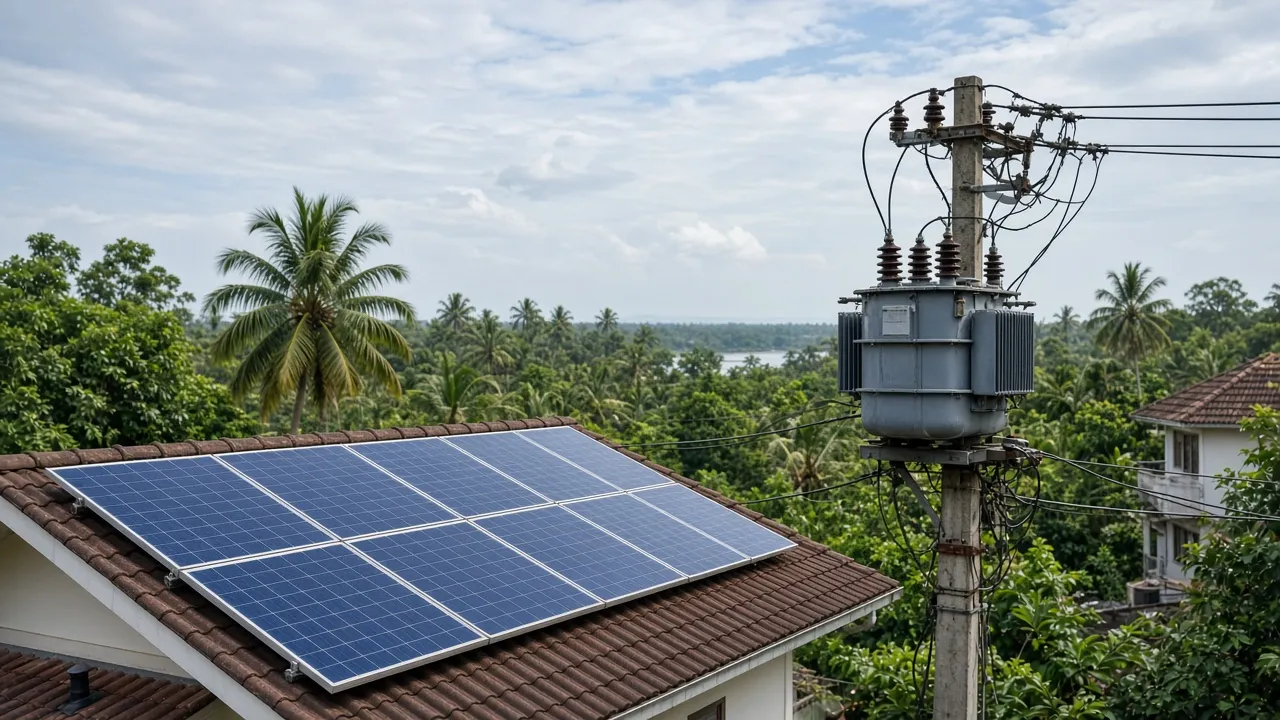
Quick answer: All rooftop plants on one transformer together usually cannot pass 90% of that transformer's rating, and each phase is capped at 30%. KSEB has 15 days to study your online application. PM Surya Ghar 'deemed feasibility' for plants up to 10 kW still needs spare hosting capacity, a plant size within your connected load, and compliance with the single-phase inverter limits.
What Kerala solar hosting capacity means for your home
Hosting capacity is not your roof size. It is how much more solar (and other small renewables) your section's distribution transformer can still absorb safely. Under KSERC's 2025 regulations, Regulation 16.2 caps the total on that transformer at 90% of its rated capacity. Each electrical phase is separately capped at 30% of the same transformer.
Regulation 16.1 also caps renewables on an HT feeder at that feeder's rated capacity. If you are a single-phase consumer and your phase has already reached, or would reach, the 30% share, the proviso to Regulation 16.2 says the licensee shall, at its cost, give you connectivity on another phase that still has spare room.
A refusal that names transformer or phase loading is a hosting-capacity issue, not a ban on domestic net metering.
The 90% and 30% limits in plain numbers
| Rule | Limit | Where it sits |
|---|---|---|
| All renewables on one distribution transformer | Up to 90% of transformer capacity | Regulation 16.2 |
| Renewables on each phase of that transformer | Up to 30% of transformer capacity | Regulation 16.2 |
| Extra room when hosting is already exhausted | Up to 20% over hosting capacity, only for the plant types in Regulation 16.3 | Regulation 16.3 |
| Plant size for those over-hosting options | Up to 5 kW | Regulation 16.3(i) and (ii) |
When hosting is already full, Regulation 16.3 can still allow a small extra slice—up to 20% above the exhausted limit—but only for plants up to 5 kW that meet strict technical conditions.
Those conditions are either a hybrid inverter with dynamic reactive support plus battery storage of at least 30% of the plant's generation potential, or an inverter with reactive support plus a smart meter that can cut output when the grid is constrained.
How KSEB must check feasibility, and when it is deemed granted
After you file a complete online application, Regulation 17.6 gives the distribution licensee 15 days to finish a technical feasibility study, subject to the other conditions in the regulations.
Under the PM Surya Ghar path, plants up to 10 kW may get deemed feasibility after online verification under the proviso to Regulation 17.6. Spare transformer room, a fit with sanctioned connected load, and compliance with Regulation 16.5 are still required before that shortcut applies.
If approval cannot be granted because the transformer is short of capacity or for other technical reasons, Regulation 17.7 says you must be told the reasons. Where the study finds hosting capacity exhausted, feasibility can still be granted if you agree to the Regulation 16.3 conditions. If your application is complete and the licensee misses the 15-day timeline, feasibility is deemed granted. If refusal was only for hosting capacity and spare room appears within six months, the licensee must intimate you so you can file a fresh application.
Where to see your transformer's spare capacity
Regulation 16.4 orders the licensee to publish, section by section, each transformer's capacity and the cumulative renewable capacity already connected to it (behind-the-meter systems excluded). That list is due not later than the 10th of every month, both at the section and on the licensee's website.
- Ask your section office which distribution transformer feeds your service connection.
- Check the latest monthly hosting list for that transformer's spare percentage.
- If your phase looks full, ask whether another phase still has room under the Regulation 16.2 proviso.
- Keep the written refusal reasons if feasibility is rejected; they matter for a fresh filing later.
Single-phase inverter limit that also blocks feasibility
Deemed feasibility for PM Surya Ghar also needs Regulation 16.5. The normal rule is that a single-phase inverter can connect at most 3 kW of plant capacity; above 3 kW you need three-phase inverters. Existing prosumers, and people who already had feasibility when the regulations were notified, may continue with their existing or proposed inverter. Where no three-phase network exists when you seek feasibility, single-phase inverters up to and including 5 kW are allowed for applications seeking feasibility till 31 March 2027.
Alongside hosting capacity, Regulation 6.6 caps plant capacity at your connected load in kW (or contract demand in kVA if you are billed on demand). A transformer with spare room still will not clear a plant larger than that load limit.
What to do if your area transformer is nearly full
- Read the refusal letter: hosting capacity, phase imbalance, or another technical reason.
- Ask whether Regulation 16.3 over-hosting options apply to a plant of 5 kW or less.
- Ask your section to note you for the six-month hosting reopening under Regulation 17.7.
- Treat the refusal as local to that transformer, not as proof that domestic rooftop solar stopped statewide.
Meter delays after installation are a separate queue from feasibility. If panels are already up and you are waiting for the bi-directional meter, follow the meter status with your section office. If you are still at the application stage, fix hosting capacity first — a meter cannot be issued until feasibility is cleared under the regulations.
Check this against your bill
FGE Solar can review your latest KSEB bill and tell you which system size is worth pricing.
Frequently Asked Questions
Why was my KSEB solar feasibility rejected?
A common technical reason is hosting capacity. Renewables on your distribution transformer may already be near the 90% cap, or your phase near the 30% share. Regulation 17.7 requires the licensee to state the reasons in writing. Ask for that explanation and keep a copy.
What is the 90% transformer rule for rooftop solar in Kerala?
Regulation 16.2 limits cumulative distributed energy systems on a distribution transformer to 90% of that transformer's capacity. Each phase is separately limited to 30% of the same transformer capacity. Those two numbers drive many local refusals.
Does PM Surya Ghar skip the hosting capacity check?
It does not. Deemed feasibility for plants up to 10 kW under the scheme still needs spare hosting capacity. Your plant must also stay within connected load. The single-phase inverter rule in Regulation 16.5 must be met too.
How long does KSEB have to decide technical feasibility?
Regulation 17.6 sets 15 days from the online application for the technical feasibility study. That clock runs subject to the regulation's conditions. On a complete application, missing the timeline leads to deemed feasibility under Regulation 17.7.
Can I still get solar if my transformer is full?
Sometimes, for small plants. Regulation 16.3 allows limited over-hosting up to 20% above exhausted hosting capacity for qualifying designs up to 5 kW. Otherwise wait for spare capacity. Regulation 17.7 provides for intimation within six months if capacity reopens.
Official Sources and Accuracy Note
- 01KSERC (Renewable Energy and Related Matters) Regulations, 2025
Regs 16.1–16.6 hosting capacity; Regs 17.6–17.7 feasibility timelines and rejections.
govt source · opened 2026-09-28
Accuracy note: This guide is built from government pages, regulator orders, and news sources on the web. Rules and amounts change. Some details may be outdated or wrong. Check the official links below before you pay, apply, or complain to KSEB.