Old Phase II Solar Subsidy Claims: Reported 30 Nov Deadline
If your Kerala home got rooftop solar under the old Phase II scheme and the central subsidy never reached your bank account, two Indian solar news sites report that MNRE has given more time: the Phase II solar subsidy claim cut-off is reportedly 30 November 2026. This is reported news and is not yet officially confirmed. Below, the reported change is kept apart from what MNRE's own documents say.
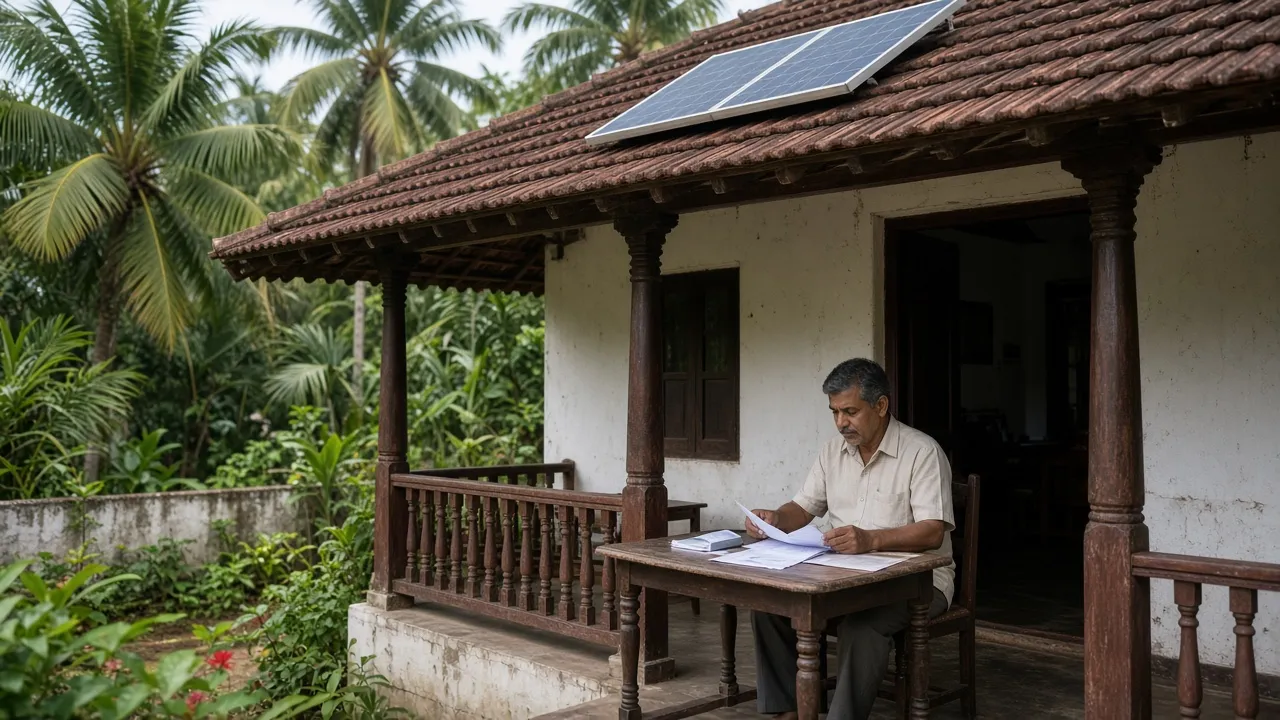
Quick answer: Reports say MNRE will accept old Phase II subsidy claims received by 30 November 2026 for applications at the redeemed, inspected or installed stage. The last cut-off MNRE itself has published is 31 December 2025, set in July 2025. If you applied on the National Portal before 13 February 2024, had the plant installed and are still unpaid, check your application status and contact KSEB now.
What the news reports say about the deadline
Reported, not yet officially confirmed. Energetica India and Saur Energy both reported on 1 September 2026 that MNRE has extended the deadline for old Phase II rooftop solar subsidy claims to 30 November 2026. Energetica India cites an MNRE office memorandum dated 31 August 2026, while Saur Energy cites the amended PM Surya Ghar guidelines without giving a date. Vyqon reported the same extension on 5 October 2026, citing MNRE file number 318/140/2024-GCRT.
According to both outlets, the extension covers applications under the old Grid Connected Rooftop Solar Phase II programme that have reached the redeemed, inspected or installed stage. Saur Energy writes that such claims stay eligible if they are received by 30 November 2026, and that the subsidy is still worked out under the Phase II guidelines. Energetica India reports that the new memorandum replaces the 31 December 2025 claim date set in July 2025.
The reports differ on one point. Saur Energy says the amended clause no longer contains the earlier line about applications that had not been installed by 1 April 2025. Energetica India says the memorandum still treats those applications as ineligible and deleted.
What is officially confirmed about old Phase II claims
MNRE ran the Grid Connected Rooftop Solar Phase II programme from 2019, and that scheme now stands subsumed within PM Surya Ghar: Muft Bijli Yojana. The PM Surya Ghar guidelines say the subsidy for ongoing Phase II projects is governed by the Phase II guidelines, not by the PM Surya Ghar subsidy structure. MNRE's programme page gives the period of the existing Phase II scheme as up to 31 March 2026.
Every application received before 13 February 2024, when PM Surya Ghar began taking applications, is covered under Phase II, according to Annexure 1 of the PM Surya Ghar subsidy guidelines notified on 7 June 2024. The rate depends on when the first claim was submitted, as the table below shows. Those original guidelines accepted Phase II claims only until October 2024.
Phase II subsidy rates for individual homes, by the date the first claim was submitted (Annexure 1, PM Surya Ghar subsidy guidelines).
| First claim submitted | Up to 3 kW | Above 3 kW up to 10 kW |
|---|---|---|
| Before 5 January 2024 | ₹14,588 per kW | ₹7,294 per kW |
| On or after 5 January 2024 | ₹18,000 per kW | ₹9,000 per kW |
MNRE has changed the cut-off before. Its office memorandum of 7 July 2025 says Phase II applications at the redeemed, inspected or installed stage are admissible for subsidy if the claim is received by 31 December 2025, under the Phase II rules. The same memorandum makes applications that were submitted but not installed as on 1 April 2025 ineligible and orders them deleted from the database.
MNRE's programme page describes two Phase II routes for homes. On the National Portal route, which opened on 30 July 2022, the subsidy is transferred directly to your bank account after the empanelled vendor installs the plant and the DISCOM verifies it. On the DISCOM portal route, you pay the vendor only the balance after the subsidy is deducted.
Who in Kerala still has a Phase II solar subsidy claim
In Kerala the DISCOM is KSEB, so KSEB carried out the inspection on these homes. The homes that matter here applied on the National Portal before 13 February 2024, had the plant installed, and are still waiting for the subsidy in their bank account. On that route MNRE pays the subsidy into the homeowner's own account, so a stuck claim affects you directly.
- Homes that applied on or after 13 February 2024. They follow the current PM Surya Ghar subsidy, explained in the PM Surya Ghar guide linked below.
- Homes that bought through the DISCOM portal route. The subsidy was deducted from the price at the time, so no payment to your bank account is pending.
- Old applications where no plant was ever installed. The July 2025 memorandum dealt with those separately.
What this means for you now
- Log in to the National Portal with the mobile number or application number you used, and write down the exact status shown.
- Keep your commissioning papers, KSEB inspection report, net meter details, invoice and bank passbook in one folder.
- Check that the name and bank account on the portal match your KSEB bill and your passbook letter by letter.
- If the status has not moved, write to KSEB's rooftop solar section with your application number and consumer number, and keep the reply.
- Ask your installer for any claim papers they still hold for your plant.
- Do not pay anyone who offers to speed up a subsidy for a fee.
If your application is already at the installed, inspected or redeemed stage, reports say the claim must be received by 30 November 2026, so it is safer to start now than near that date. According to Saur Energy, the amount is still worked out under the old Phase II rules, which means the rates in the table above apply rather than the current PM Surya Ghar subsidy.
For portal problems, the PM Surya Ghar call centre on 15555 works in 12 languages, according to PIB's release of 25 March 2026. MNRE's programme page also lists [email protected] for questions about the rooftop solar programme.
Where the official notice stands
As of 6 October 2026, the extension could not be found on MNRE's website, in PIB's releases or on the PM Surya Ghar portal. MNRE's notices still show the July 2025 memorandum, with its 31 December 2025 date, as the latest change to these claims. This page will be updated when MNRE publishes an official notice.
Check this against your bill
FGE Solar can review your latest KSEB bill and tell you which system size is worth pricing.
Frequently Asked Questions
Was my 2023 solar application under Phase II?
Yes, if you applied before 13 February 2024. The PM Surya Ghar guidelines place every earlier application under the Phase II programme. Applications from that date onward are PM Surya Ghar cases.
Who gets the subsidy if I bought through the DISCOM route?
On that route the subsidy came off the price before you paid. MNRE's programme page says the consumer pays the vendor only the balance after deducting the subsidy. Nothing is paid into your bank account later.
How much was the old Phase II subsidy for a 3 kW home?
It depends on when the first claim went in. If it was on or after 5 January 2024, the rate is ₹18,000 per kW, which comes to ₹54,000 for 3 kW. Earlier claims use ₹14,588 per kW.
Can I re-apply if my old application was deleted?
Yes. The July 2025 memorandum says consumers whose Phase II applications were deleted are at liberty to re-apply under PM Surya Ghar. A new application gets PM Surya Ghar terms, not the old Phase II rates.
Where can I see the status of an old application?
Use the National Portal login you applied with. MNRE's January 2023 memorandum says every step from application to subsidy release can be monitored online there. Note the exact status before you contact KSEB.
Official Sources and Accuracy Note
- 01Energetica India, 1 Sep 2026 (Mrinmoy Dey): MNRE Extends PM Surya Ghar CFA Claim Deadline to November 30, 2026
Energetica India reports the 30 Nov 2026 claim deadline and cites an office memorandum (OM) dated August 31, 2026; article dated 1 Sep 2026.
news source · opened 2026-10-06 - 02Saur Energy, 1 Sep 2026: MNRE Extends Rooftop Solar Phase II Subsidy Claim Deadline To Nov 30
Saur Energy (01 Sep 2026 09:45 IST) reports the same extension, citing 'the amended operational guidelines for the PM-Surya Ghar: Muft Bijli
news source · opened 2026-10-06 - 03Vyqon, 5 Oct 2026 (Gaurav Nathani): MNRE Extends CFA Claim Deadline for Legacy Rooftop Solar Phase II Applications to November 30, 2026
Vyqon (5 Oct 2026) reports the extension and lists the MNRE reference F. No. 318/140/2024-GCRT, with no memo date.
news source · opened 2026-10-06 - 04MNRE office memorandum F.No. 318/140/2024-Grid Connected Rooftop dated 07.07.2025 with annexure, bundled with the PM Surya Ghar CFA guidelines (OM 318/17/2024-GCRT, 07.06.2024)
CFA guidelines para 4(a) — Phase II run since 2019 'stands subsumed within the PM Surya Ghar'; para 4(d) — CFA for ongoing Phase II projects
govt source · opened 2026-10-06 - 05MNRE: Grid Connected Rooftop Solar Programme page (last updated 14 Feb 2025)
MNRE programme page heading 'Period of existing Phase-II scheme: Till 31.03.2026'.
govt source · opened 2026-10-06 - 06MNRE notice: Amendment in Guidelines for PM-Surya Ghar for the component of CFA to residential consumers (start date 07/07/2025)
MNRE notice page listing this amendment with start date 07/07/2025 and the PDF link.
govt source · opened 2026-10-06
Accuracy note: This guide is built from government pages, regulator orders, and news sources on the web. Rules and amounts change. Some details may be outdated or wrong. Check the official links below before you pay, apply, or complain to KSEB.