KSEB Solar Application Timeline: Feasibility to Meter
KSERC's 2025 rules spell out how long each step of a KSEB rooftop solar file should take—from online feasibility to bi-directional meter commissioning. Regulation 17 sets maximum days for KSEB and for you, so you can track delays with the regulation in hand.
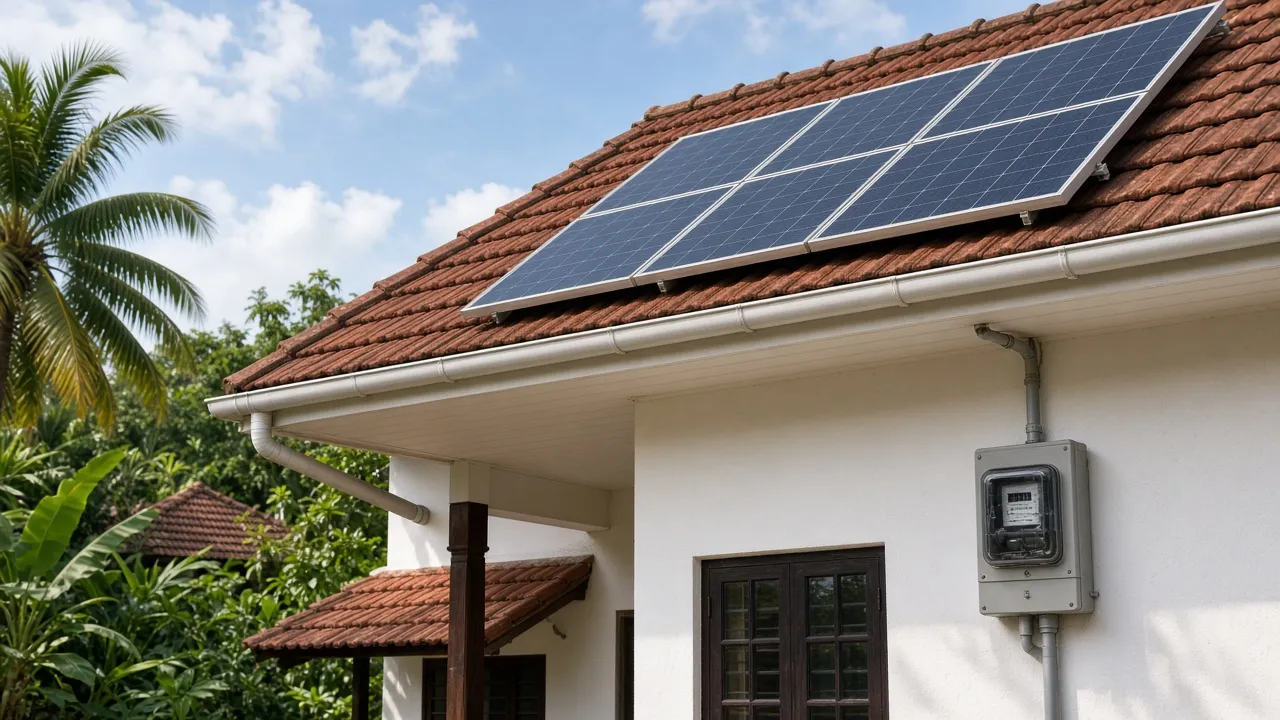
Quick answer: Complete online feasibility: KSEB acknowledges the same day and decides within 15 days. You then have 45 days to register. After registration, build the plant within 6 months (one extension possible). Testing, agreement and meter steps each have fixed working-day windows; the meter should go in within 15 days once the required reports are in.
Why the KSEB solar application timeline sits in Regulation 17
Regulation 17.2 says the default mode for feasibility, registration and connectivity applications is online. The licensee’s web portal must offer real-time status tracking, a single point of contact, the document list, applicable charges, standard agreements, the MNRE empanelled service-provider list, scheme incentives, and feeder or distribution-transformer-wise balance hosting capacity.
Regulation 17.3 requires the licensee to grant feasibility and registration to eligible consumers on a non-discriminatory, distribution-transformer-wise or feeder-wise first-come-first-served basis, subject to hosting and technical rules elsewhere in the same package. Your place in the queue is a capacity question, not a private negotiation.
Feasibility: 15 days, deemed grant, and PM Surya Ghar up to 10 kW
After you submit the online feasibility application with technical details and the application fee, Regulation 17.6 requires the licensee to conduct the technical feasibility study within 15 days. Regulation 17.5 says receipt must be acknowledged automatically online with a reference number for tracking.
If the application is complete in all aspects and the licensee fails to give feasibility within that 15-day timeline, Regulation 17.7 says feasibility shall be deemed to be granted. If the licensee refuses because hosting capacity is inadequate, it must state the reasons; if capacity opens within six months, it must intimate you so you can file a fresh feasibility application.
For rooftop solar projects up to 10 kW registered under PM Surya Ghar: Muft Bijli Yojana, Regulation 17.6 provides deemed feasibility after online verification when three conditions are met: balance hosting capacity on the distribution transformer, proposed capacity less than or equal to the sanctioned connected load, and satisfaction of Regulation 16.5 on single-phase and three-phase inverters.
For RTS installations under PM Surya Ghar, Regulation 17.4 says the application fee and the registration fee shall be collected in the subsequent bills issued immediately after commissioning of the plant, instead of blocking you at the upload stage for those two fees.
Registration window, fees, and six-month validity
Regulation 17.8 gives you 45 days from receipt of technical feasibility or deemed feasibility to apply online for registration of a scheme whose capacity is less than or equal to the feasibility certificate. Miss that window and you are outside the registration step Table 2 assumes.
| Fee | Amount |
|---|---|
| Application fee | ₹1,000 |
| Registration fee | ₹300 per kW or part thereof |
Table 1 under Regulation 17 carries a proviso: the distribution licensee may exempt the applicant from application or registration fee against any grant, incentive or subsidy provided by the Central or State Government. That is licensee discretion tied to a government support scheme, not an automatic waiver for every domestic file.
- Within 3 working days of the registration application, the licensee verifies documents and tells you about defects; you get 7 working days to cure them under Regulation 17.9.
- If you cannot cure defects in time, you may surrender the granted capacity and receive a refund of 50 percent of the registration fee.
- Otherwise the licensee registers the scheme and assigns a registration number within three days of receiving the completed application.
- If another applicant is already waiting for the same transformer or feeder capacity, the licensee cannot stretch validity the same way; otherwise one extension of up to six months may be granted for good and sufficient reasons.
- Failing to install before validity ends forfeits the registration fee and frees the capacity for later applicants.
From plant completion to net meter: Table 2 clocks
| Step | Maximum timeline |
|---|---|
| Acknowledge feasibility application | Same day (online) |
| Feasibility certificate | Within 15 days of application |
| Your registration application | Within 45 days of feasibility |
| Licensee scrutiny of registration | Within 3 working days |
| Registration | Within 3 working days of complete fee-paid file |
| Complete plant and submit report/approval | Within 6 months of registration (or extended period) |
| Testing of the RE system | Within 7 working days of report/approval |
| Sign connectivity agreement | Within 7 working days of successful testing |
| Install meter and commission | Within 15 days of report/approval submission |
Regulation 17.10 requires the electrical installation work and the test-cum-completion report to be done by a licensed Electrical Contractor. Regulation 17.11 adds that where Central Electricity Authority connectivity and safety rules require it, you must obtain energisation sanction from the Electrical Inspector and submit that approval to the licensee before the testing clock in Table 2 runs.
Regulation 17.16 says the distribution licensee shall provide grid connectivity arrangements without delay or discrimination within the time limits in Table 2, subject to the other provisions of the same package. That is the regulatory yardstick if a file stalls after you have submitted a complete report and approvals.
Connectivity agreement length and what you can change later
Regulation 18.4 says the connectivity agreement normally remains in force for twenty-five years. During that period you may amend, modify or assign it with the licensee’s approval for changes such as metering or billing system, plant capacity, plant configuration or ownership, by following the procedure under the rules and the Supply Code for the balance period.
Check this against your bill
FGE Solar can review your latest KSEB bill and tell you which system size is worth pricing.
Frequently Asked Questions
How many days does KSEB have for solar feasibility?
Regulation 17.6 gives 15 days from the online application for the technical feasibility study. If a complete application gets no reply in that time, Regulation 17.7 treats feasibility as deemed granted.
What fees apply at registration for a 3 kW plant?
Table 1 sets registration at ₹300 per kW or part thereof. A 3 kW file is therefore ₹900, plus the separate ₹1,000 application fee, unless a PM Surya Ghar timing rule or stated exemption applies.
Can KSEB extend my solar registration past six months?
Yes, once, and only for good and sufficient reasons. Regulation 17.9 caps that extension at another six months, and only when no other feasibility applicant is waiting for the same transformer or feeder capacity.
When must the net meter be installed?
Table 2 under Regulation 17.15 requires meter installation and commissioning within 15 days from submission of the report or approval. Testing and agreement signing have their own seven-working-day clocks in the same table.
Do PM Surya Ghar homes pay fees before installation?
For PM Surya Ghar rooftop files, Regulation 17.4 collects application and registration fees in the bills issued right after commissioning. Deemed feasibility up to 10 kW still needs the hosting-capacity and connected-load checks in Regulation 17.6.
Official Sources and Accuracy Note
- 01KSERC (Renewable Energy and Related Matters) Regulations, 2025
Reg 17.2 online portal duties and tracking.
govt source · opened 2026-10-02
Accuracy note: This guide is built from government pages, regulator orders, and news sources on the web. Rules and amounts change. Some details may be outdated or wrong. Check the official links below before you pay, apply, or complain to KSEB.