Kerala Solar 20 kW Domestic Net Metering Limit 2026
For a normal domestic KSEB connection, net-metered rooftop solar can be sized from 1 kW up to 20 kW under KSERC's 2025 rules. That 20 kW ceiling is not the only test: plants above 10 kW need hybrid battery storage, and your inverter AC rating still cannot exceed your sanctioned connected load.
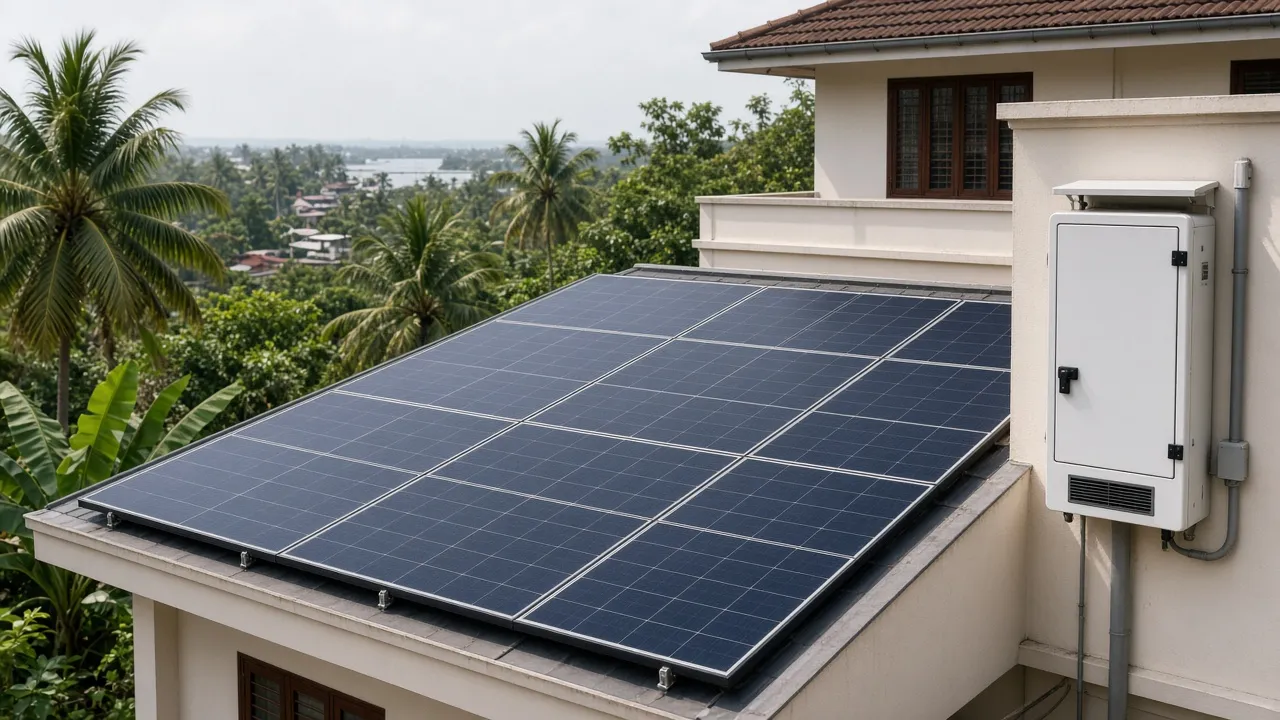
Quick answer: New domestic net metering: 1–20 kW plant capacity (Regulations 6.1 and 6.3). Above 10 kW you need the hybrid storage package in Regulation 6.3. In every case, plant capacity is capped by your connected load in kW (Regulation 6.6).
What Kerala solar 20 kW means for domestic net metering
Regulation 6.1 says domestic consumers seeking feasibility for a new renewable plant, or an upgrade of an existing one, may opt for net metering for plant capacities from 1 kW to 20 kW. The same regulation lists separate bands for industrial, agriculture and residential common-area connections. Those other bands are not the rule for an ordinary house service connection.
Regulation 6.3 repeats the domestic ceiling in plain words: the maximum permissible plant capacity shall be 20 kW, subject to Regulation 6.6. Plant capacity in these regulations means the inverter’s nominal AC kilowatts. Panel stickers in kWp are a DC design figure and do not redefine the domestic band by themselves.
So when a quote says “20 kW system,” ask which number is the inverter AC rating. That is the figure KSEB treats as plant capacity for the domestic net-metering band. A larger panel field can still be designed under Regulation 16.6 if the inverter’s AC output never exceeds its rated capacity.
Storage bands when the plant rises above 10 kW
Above 10 kW the domestic band is not battery-free. Regulation 6.3 requires hybrid inverters with minimum storage of 10% of the plant’s energy generation potential for capacity above 10 kW and up to and including 15 kW. For capacity above 15 kW and up to and including 20 kW, the minimum storage rises to 20% of that potential.
From 1 April 2027, a further proviso applies to new feasibility seekers. Plants with capacity above 5 kW and up to and including 10 kW must also install hybrid inverters with minimum storage of 10% of energy generation potential. Homes applying before that date stay on the earlier 6.3 storage map for the up-to-10 kW band.
Regulation 16.9 sets how storage size is judged for net-metered solar: energy generation potential is reckoned using a capacity utilisation factor (CUF) of 19%. Ask the installer to show the storage kilowatt-hour figure against that formula, not only a battery brand label.
Hybrid storage here is a regulatory minimum tied to plant size. It is separate from how many hours of backup you personally want during a power cut.
Connected load still caps what you can install
Even inside the 1–20 kW domestic band, Regulation 6.6 says the maximum plant capacity must not exceed the connected load in kW for connected-load billing consumers. Demand-based consumers use contract demand in kVA as the ceiling instead. A 15 kW inverter on a home whose bill shows a much smaller connected load does not fit that rule.
If your recorded connected load is low and you want a larger plant, talk to KSEB about revising the load on the service connection before you chase a big feasibility. Feasibility and registration follow the load that is on record when you apply.
Feasibility can still refuse or resize a plant that fits the domestic band on paper if the local distribution transformer or phase share cannot host it. The 20 kW rule is a metering-eligibility ceiling, not a promise that every feeder can take 20 kW.
Who is outside this domestic net-metering band
Regulation 6.1 lists net metering for Domestic, Industrial, Agriculture and residential common-area connections. A shop, office or hotel service connection is not in that list. Those commercial connections use net billing under Regulation 7 when they want a grid-interactive renewable plant under that path.
Existing net-metered prosumers continue under Regulation 6.2 until a Regulation 2.3 trigger occurs. Replacing panels or swapping to a new inverter or hybrid inverter within ±10% of the original inverter capacity is not a capacity enhancement under Regulation 2.3(iii).
Regulation 2.3 also ends the protected existing status if you choose another metering system, or when the useful life of the existing plant from the net-metering connectivity date expires. An inverter swap inside the ±10% band is not that kind of trigger.
Quick reference table for a Kerala home
| Plant band (AC kW) | Domestic net metering | Minimum hybrid storage |
|---|---|---|
| 1 kW to 10 kW | Allowed if ≤ connected load | None in Reg 6.3 until 31 Mar 2027; from 1 Apr 2027, above 5 kW needs 10% |
| Above 10 kW to 15 kW | Allowed if ≤ connected load | 10% of energy generation potential (CUF 19%) |
| Above 15 kW to 20 kW | Allowed if ≤ connected load | 20% of energy generation potential (CUF 19%) |
| Above 20 kW | Outside domestic net-metering band | Use another eligible metering option |
What to put on your quote and KSEB application
- Inverter AC kW stated as plant capacity inside the 1–20 kW domestic band.
- Connected load or contract demand copied from your latest KSEB bill.
- Hybrid storage kWh sized with the 19% CUF rule when your band requires storage.
- Application marked for a domestic connection seeking net metering.
- Roof layout and single-line diagram matching the inverter AC figure you applied for.
Keep the same AC plant figure on the vendor quote, the national-portal or KSEB application, and the inverter nameplate that will be inspected. Mismatched kilowatt numbers are a common reason files bounce between feasibility, registration and metering.
If you later want to grow past 20 kW AC on the same domestic connection, you are outside this net-metering band. Discuss other eligible metering options under Chapter II before you pay for hardware sized above the domestic ceiling.
Check this against your bill
FGE Solar can review your latest KSEB bill and tell you which system size is worth pricing.
Frequently Asked Questions
What is the maximum domestic net-metering plant size in Kerala?
Regulation 6.3 sets the domestic maximum at 20 kW of plant capacity. That figure is the inverter’s nominal AC kilowatts. Your connected load under Regulation 6.6 can force a lower number.
Do I need a battery for a 12 kW domestic plant?
Yes under Regulation 6.3. Capacity above 10 kW and up to and including 15 kW needs a hybrid inverter with storage of at least 10% of energy generation potential. Regulation 16.9 uses a 19% CUF to estimate that potential.
Can my panels be larger than 20 kWp if the inverter is 20 kW?
Plant capacity for the domestic cap is the inverter AC rating. Panel kWp may follow site design if the inverter’s AC output never exceeds its rated capacity under Regulation 16.6. The net-metering band still stops at 20 kW AC.
Which billing path do shops use if they want rooftop solar?
Shops and other commercial connections are outside Regulation 6.1’s net-metering list. They may use net billing under Regulation 7 for a grid-interactive plant on that path.
Does a small inverter swap restart my existing prosumer file?
Not when the swap stays within ±10% of the original inverter capacity. Regulation 2.3(iii) says that change is not a capacity enhancement. Regulation 6.2 keeps existing net metering until a real Regulation 2.3 trigger occurs.
Official Sources and Accuracy Note
- 01KSERC (Renewable Energy and Related Matters) Regulations, 2025
Reg 6.1(i) — Domestic consumers eligible for net metering for plant capacities 1 kW to 20 kW; other categories listed separately.
govt source · opened 2026-09-29
Accuracy note: This guide is built from government pages, regulator orders, and news sources on the web. Rules and amounts change. Some details may be outdated or wrong. Check the official links below before you pay, apply, or complain to KSEB.