Solar Panel Price in Kerala 2026 — Complete Buyer's Guide
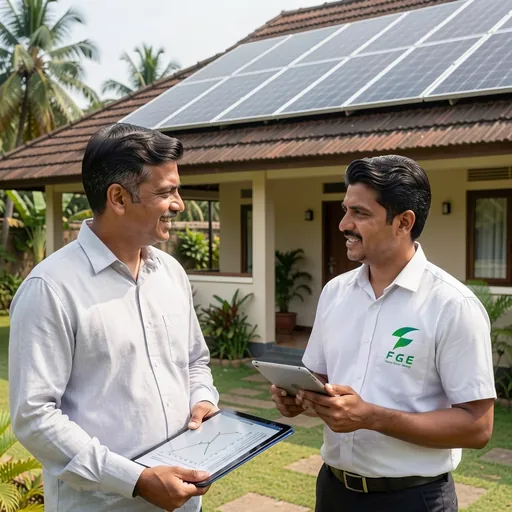
Solar prices in India have fallen by over 80% in the past decade, and Kerala's market has followed that trend. In 2026, a quality residential solar system still remains far more accessible than it was even three years ago — and with PM Surya Ghar subsidy covering up to ₹78,000, the net investment has never been lower.
This guide breaks down current prices in Kerala for different system sizes, panel brands, and configurations — along with what's included, what to watch out for, and how to compare quotes properly.
Note on pricing: Solar prices vary by district (transport/logistics), rooftop access, panel brand, and inverter make. The figures below represent practical Kerala market ranges as of April 2026. Be wary of quotes significantly below these ranges — they usually indicate compromises on quality.
Verification note
This guide has been refreshed for April 2026, but final pricing should still be confirmed against live quotations because rooftop access, district logistics, brand choice, and system type can shift quote ranges.
1. Complete System Prices — What You'll Actually Pay
These are turnkey prices — including panels, inverter, mounting structure, cabling, installation, and KSEB net metering application. Not just panel prices.
| System Size | Gross Price Range | PM Surya Ghar Subsidy | Net Cost (After Subsidy) | Ideal For |
|---|---|---|---|---|
| 1 kW | ₹75,000–90,000 | ₹30,000 | ₹45,000–60,000 | Apartments, small homes (50–100 units/month) |
| 2 kW | ₹1,30,000–1,55,000 | ₹60,000 | ₹70,000–95,000 | Homes using 150–200 units/month |
| 3 kW | ₹1,70,000–2,10,000 | ₹78,000 | ₹92,000–1,32,000 | Most Kerala homes (250–350 units/month) |
| 4 kW | ₹2,20,000–2,70,000 | ₹78,000 | ₹1,42,000–1,92,000 | Large homes with AC (350–450 units/month) |
| 5 kW | ₹2,60,000–3,20,000 | ₹78,000 | ₹1,82,000–2,42,000 | High-consumption homes, small businesses |
| 7.5 kW | ₹3,80,000–4,60,000 | ₹78,000 | ₹3,02,000–3,82,000 | Villas, medium commercial |
| 10 kW | ₹4,80,000–5,80,000 | ₹78,000 | ₹4,02,000–5,02,000 | Commercial premises, farms |
Note: Subsidy applies only to residential connections under PM Surya Ghar (Muft Bijli Yojana). Commercial systems are not eligible. Subsidy is ₹30,000/kW for the first kW, ₹18,000/kW for next 2 kW, capped at ₹78,000 for 3 kW and above.
2. What Drives the Price Variation?
Two quotes for the same system size can vary by ₹40,000–80,000. Here's why:
Panel Brand and Efficiency
Panel quality is the biggest variable. Higher-efficiency panels (21–22% vs 18–19%) cost more but generate more power from the same roof area.
Tier 1 — Premium
- REC (Norway/Singapore)
- LG NeON (South Korea)
- LONGi (China)
- Jinko Tiger Pro
- Canadian Solar HiHero
Tier 1 — Value
- Adani Solar
- Waaree Solar
- Vikram Solar
- Tata Power Solar
- Renewsys
Tier 2 — Budget
- Various Chinese OEM brands
- Local manufacturers
- Rebadged panels
- ? Higher degradation risk
- ? Warranty concerns
For most Kerala homeowners, Adani, Waaree, or Vikram panels offer the best value — Indian manufacturers with good warranty support, competitive pricing, and solid performance. Premium imported panels (REC, Jinko) cost 15–20% more and are worth it for space-constrained roofs where you need maximum watts per square metre.
Inverter Type
| Inverter Type | Best For | Price Premium | Kerala Suitability |
|---|---|---|---|
| String Inverter (Growatt, Solis, Fronius) | Simple, unshaded roofs | Baseline | Excellent for most homes |
| Hybrid Inverter (Deye, Goodwe, Huawei) | Battery-ready systems | +₹15,000–30,000 | Good for power cut areas |
| Microinverters (Enphase, APsystems) | Shaded/complex roofs | +₹30,000–60,000 | Worth it for tricky roofs |
Mounting Structure
RCC rooftop, sloped tile roof, and metal sheet roofs all require different mounting. RCC is cheapest; tile roofs need special clamps that add ₹5,000–15,000 to the cost. Sloped metal sheet (like in Wayanad/Idukki tea estate homes) requires careful anchoring.
3. What Should Be Included in a Quote
A proper turnkey solar quote must include:
- Solar panels — brand, wattage, quantity, efficiency rating, warranty (25-year performance + 10–12 year product warranty)
- Grid-tied inverter — brand, capacity, warranty (5+ years)
- Mounting structure — hot-dip galvanised or aluminium, roof-specific design
- DC cables, AC cables, earthing kit, lightning arrester
- AC disconnect switch and generation meter
- KSEB net metering application and liaison (critical — many installers charge extra for this)
- KSEB/government inspection support
- PM Surya Ghar subsidy application (for eligible homes)
- Installation labour
- 1–5 year AMC / workmanship warranty
Watch out for: Quotes that separate "panel price" from "installation charges" and "net metering charges" — always compare total delivered and commissioned costs. Also watch for suspiciously cheap quotes that use uncertified panels without BIS/MNRE empanelment.
4. Roof Requirements and Space
Every kilowatt of solar requires roughly 8–10 sq. metres of usable roof space (shadow-free). Here's the practical space needed:
| System Size | Panels Needed (400W each) | Roof Area Required |
|---|---|---|
| 1 kW | 2–3 panels | ~20–25 sq. m |
| 2 kW | 5 panels | ~40–45 sq. m |
| 3 kW | 7–8 panels | ~55–65 sq. m |
| 5 kW | 12–13 panels | ~90–105 sq. m |
| 10 kW | 25 panels | ~180–200 sq. m |
5. Price vs. Savings — Does it Make Sense?
At current Kerala prices and KSEB tariffs, for a home spending ₹3,000–4,000/month on electricity:
- A 3 kW system after subsidy costs ~₹1.0–1.3 lakh
- Annual savings: ₹32,000–40,000
- Simple payback: 3–4 years
- 25-year return: ₹8–14 lakh on an initial investment of ~₹1.1 lakh
Even with the higher-end pricing, the economics are compelling — and KSEB tariffs have historically increased 5–8% per year, making solar more valuable each year.
6. How to Evaluate Installers — Not Just Price
- MNRE empanelment: Check if the installer is on the MNRE vendor list at pmsuryaghar.gov.in — mandatory for PM Surya Ghar subsidy.
- KSEB net metering experience: Ask how many net metering connections they've completed and the typical timeline in your area.
- Warranty clarity: Get panel product warranty, performance warranty, inverter warranty, and workmanship warranty in writing.
- After-sales service: Who handles inverter faults 3 years from now? Do they have a local service team?
- Site visit: A serious installer does a physical site assessment before quoting — not just a WhatsApp quote.
Get a transparent, itemised quote with no hidden charges.
Free site visit, no obligation.